

Belagavi: With rainfall in Karnataka down by around 30% this year, concerns are growing over water availability during the coming summer. Officials may need to begin advance planning as water levels in several major reservoirs remain below their capacities.
For more details : https://pudhari.news/belgaon/belgaum-23-reservoirs-80-percent-full-30-percent-rainfall-deficit-water-shortage-risk-sk95
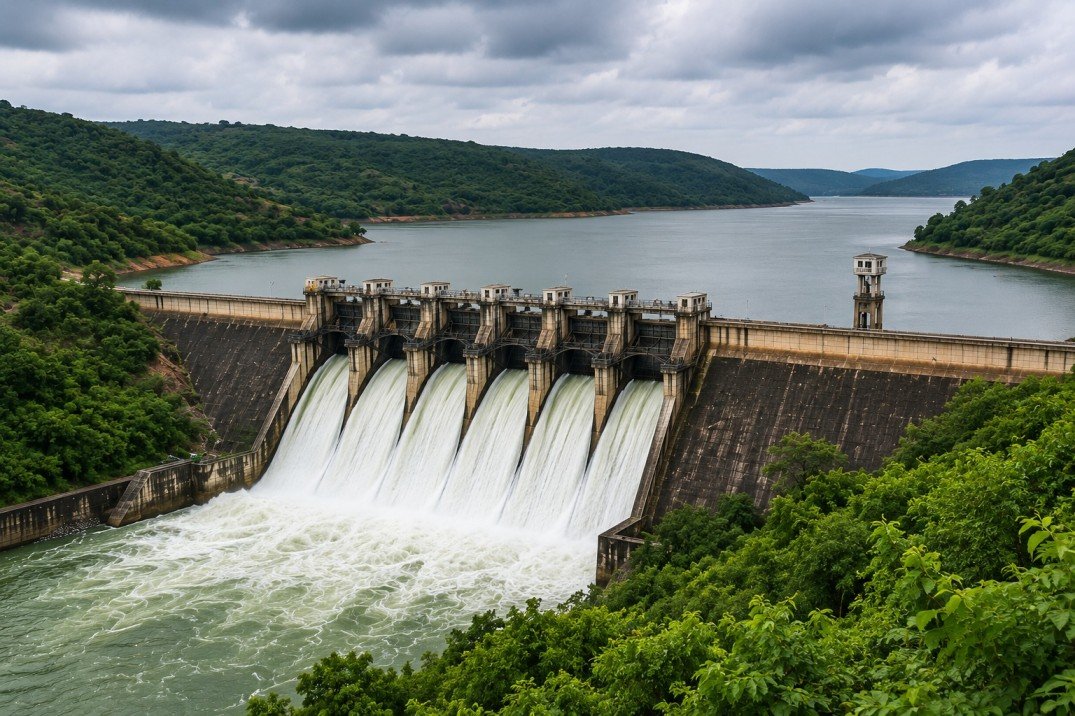
Of the 23 major reservoirs in Karnataka, only Hidkal and Almatti (Lal Bahadur Shastri Reservoir) are currently filled to nearly 100%. The remaining 21 reservoirs have storage levels below 80%.
As of August 28, the state’s major reservoirs had a combined storage of around 400 TMC, against a total capacity of 535 TMC. The storage is lower compared with the levels recorded during the previous two years.
Hidkal and Almatti Nearly Full
The Krishna basin, which has 17 major reservoirs, has received relatively better rainfall. These reservoirs have a combined capacity of about 430 TMC and currently hold around 341 TMC, or nearly 79% of their capacity.
Almatti Reservoir is almost full, with 122.659 TMC of water against its capacity of 123.081 TMC. Belagavi’s Hidkal Reservoir is also nearly full, holding 50.843 TMC against its 51 TMC capacity.
The Tungabhadra Reservoir has around 96.229 TMC against its capacity of 105 TMC.
However, the situation is different at Naviluteertha Reservoir in Belagavi district, which has only 19.4 TMC of water against its capacity of 37 TMC, leaving it about half full.
Cauvery Basin Faces Shortage
The Cauvery basin has been particularly affected by deficient rainfall. Its four major reservoirs have a combined capacity of 104.551 TMC, but currently hold only around 59.662 TMC.
Krishnarajasagar (KRS) Reservoir has 31.92 TMC against its capacity of 49.50 TMC, while Bhadra Reservoir has 60 TMC against a capacity of 71.53 TMC. Storage in KRS, Kabini, Harangi and Hemavathi reservoirs is also lower than last year.
Karnataka has 190 taluks that have received below-average rainfall, with 101 taluks declared drought-affected.

Irrigation and Drinking Water Concerns
Lower reservoir storage could affect irrigation in the coming months. Karnataka has around 46.75 lakh hectares of irrigated land, with water supplied through major and medium reservoirs in the Krishna, Cauvery and Tungabhadra basins.
Against the expected sowing area of 84.10 lakh hectares by August 21, sowing had been completed on only around 60 lakh hectares, or 71% of the targeted area.
Major reservoirs such as KRS, Tungabhadra, Kabini and Almatti also supply drinking water to cities and towns. Around 35–40% of the available water is generally kept reserved for drinking purposes, raising concerns over summer supplies if the storage remains low.
KRS Reservoir alone supplies around 24 TMC of water annually to Bengaluru, Mysuru and Mandya.
Hydropower Generation May Take a Hit
Reduced water availability could also affect hydropower generation in Karnataka. Power projects are located in the Sharavathi, Kali, Varahi, Cauvery, Krishna and Tungabhadra river basins.
The state generated 13,853 million units of hydropower in 2024-25 and 15,509 million units in 2025-26. With reservoir levels lower in several regions, hydropower generation could decline this year.
The declining water storage has therefore raised concerns over irrigation, drinking water supply and power generation, making early water-management planning crucial ahead of the summer months.
Read also : Belagavi Officials Asked to Ensure Transparent Disposal of SIR Voter Roll Objections