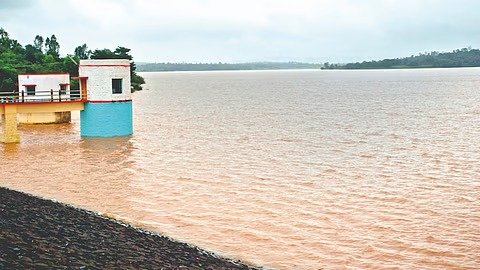


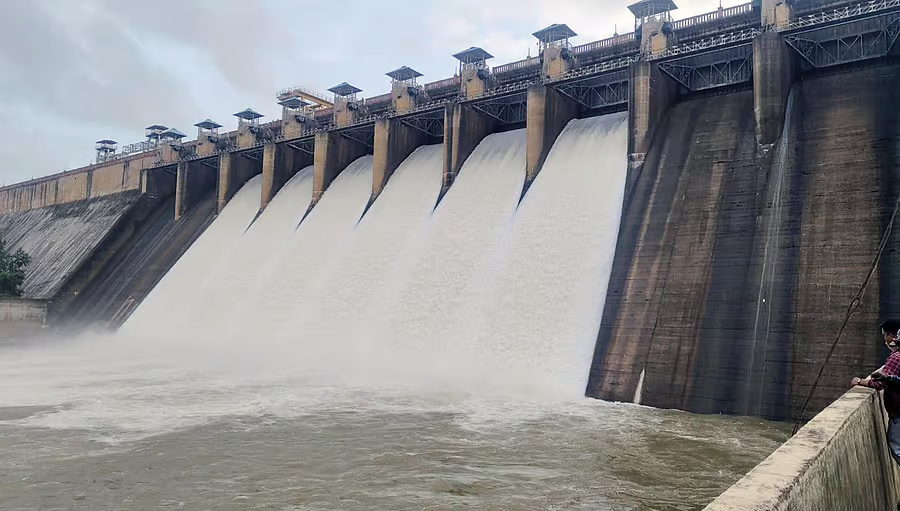
Belagavi: The monsoon’s intense and continuous rainfall continues across the Ghataprabha River’s catchment areas. Consequently, this has prompted district authorities to act decisively. Therefore, they began controlled water releases from the Hidkal Dam. This critical measure started on Saturday, July 26, at 4:00 PM. Indeed, releases continue as the reservoir’s water levels approach maximum capacity. This discharge is vital for dam safety. Furthermore, it helps regulate downstream flow, preventing uncontrolled overflow.
Read more : https://www.prajavani.net/district/belagavi/hidkal-dam-water-release-ghataprabha-alert-3429877
Initial Dam Discharge
Hidkal Dam initially released 5,000 cusecs of water. This discharge went directly into the Ghataprabha River through its crest gates. Notably, this action became necessary due to a significant surge in inflow. The reservoir is currently receiving a substantial 12,227 cusecs of water. As a result, the Hidkal reservoir’s water level has now reached a critical 2170.300 feet. This is just below its Full Reservoir Level (FRL) of 2175 feet. The dam is a crucial lifeline for irrigation and drinking water locally. Therefore, irrigation department officials are monitoring it closely, twenty-four hours a day.
Urgent Alert Issued
In light of these escalating water levels, district authorities have issued an urgent alert. This comprehensive advisory specifically targets all residents. It particularly includes those living along the floodplains and banks of both the Ghataprabha and Hiranyakeshi rivers. Indeed, low-lying villages are especially urged to respond. Officials strongly advise these communities to take immediate precautionary measures. Specifically, this means swiftly moving themselves, their families, and their valuable livestock. They should relocate to higher, designated safer grounds.
Preparedness and Further Warnings
The district administration has activated its disaster management protocols. Moreover, local police, State Disaster Response Force (SDRF) teams, and other rescue personnel remain on high alert. They are prepared to assist with any necessary evacuations or aid.
In addition, Irrigation Department officials have conveyed a serious warning regarding future releases. They state that if current relentless heavy inflows persist or intensify, the dam might release an additional 20,000 cusecs of water. Clearly, such a substantial increase could significantly elevate water levels in all downstream areas. Consequently, this poses a higher risk of widespread localized flooding. Specific villages and agricultural lands in the downstream taluks are particularly vulnerable.
Safety Advisory
“We urge all citizens living near the rivers to exercise extreme caution,” stated a senior official from the district administration. “Please cooperate with local authorities. For instance, avoid venturing near riverbanks or flooded causeways. Furthermore, monitor official announcements for updates. Your safety is our top priority.” This proactive measure aims to mitigate potential flood risks across the region. Karnataka continues to experience a robust monsoon season. However, while these rains are crucial for agriculture, their intensity demands careful management of the region’s vital water resources. This ensures public safety and minimizes disruption.
Read also : Forest Clearance Delay Stalls Belagavi Ring Road Project